- New Jersey
- 24/7 All Year
Tank or Tankless: Choosing the Right Hot Water Heater
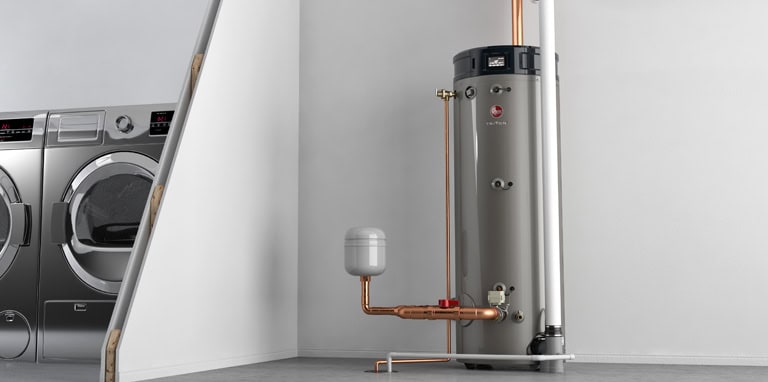
If your tank hot water heater is approaching the end of its lifetime, you might find that the decision to replace it, or consider a water heater replacement, is not quite as simple as it used to be. Stashluk clients now have a choice between highly efficient, high-tech tankless water heaters that mount to a wall and can cost several thousand dollars installed, or the conventional tank models that have been around for more than 100 years and are one-third to one-half the cost of tankless. So which is best for your home? Evaluating your household’s needs and understanding the long-term benefits and costs can help in making an informed decision.
Based on the cost differential it would seem like a no-brainer. But how do the payoffs measure up in the long run?
Sidebar: (If your hot water heater is leaking or not operating, call Stashluk right away! We’re available 24/7 in the event of an emergency plumbing, heating, or air conditioning breakdown.)
Hot water heaters: more differences than similarities
Let’s address the similarities first: tank or tankless, both styles can be powered by gas, oil, propane or electricity. However, other than cost of installation, there are other substantive differences that Stashluk can help you take into account to ensure that you make the right decision for your family and your budget. For example:
- How much hot water does your household use?
- Which is more efficient? Tankless or conventional hot water heaters?
- Which costs less to operate?
- What are the pros and cons of each?
How much hot water does your household use?
If there are more than a few people in your family—and some of them are teenagers—you’ll want to be sure that your hot water heater can serve everyone during the busiest times of the day, when demand is greatest.
Single family tank water heaters can range anywhere from 20 to 80 gallons. Obviously a 20 gallon tank isn’t nearly enough for a whole house with a family of four, automatic dishwasher, and washing machine, so figure on 40 gallons or above. Conventional tanks work by feeding hot water from the top of the tank whenever a hot water tap is turned on. Once the hot water exits, cold water enters to fill the tank which kicks on the burner to heat the water. This happens throughout the day whenever the water temperature dips below the thermostat setting and especially during busy hours when hot water is used in greater volume.
A tankless hot water heater only heats water when it is needed. When the hot water tap is turned on, cold water passes through a pipe into the unit where a gas-fired or electric heating element heats the water. Essentially, your water is heated “on demand” as there is no storage tank required.
While this may sound like the ideal, energy-efficient solution, the flip side of a tankless water heater is that the flow rate may not be able to meet demand. The more hot water that’s needed—such as when shower faucets and an automatic dishwasher are running simultaneously—the greater the chance that a tankless heater will not be able to keep up and produce enough hot water.
Which is more efficient? Tankless or tank hot water heaters?
For conventional tanks, Energy.gov recommends water heaters with thermal resistance values (R-Value) of R-12 to R-25. This is to help counter standby heat loss, which is energy that is wasted or escapes through the walls of the tank even when a hot water tap isn’t running. Stashluk can offer you tanks that are heavily insulated which can significantly cut back on standby heat losses and save you money.
For maximum energy efficiency, however, it’s hard to beat tankless systems. For one, they don’t require a tank that is constantly reheating water and bleeding energy. When properly maintained they can outlast tank hot water heaters by an average of 5-10 years. This can help offset the initial installation costs of a tankless system which are significantly higher. In fact, a two-year study funded by the Minnesota Office of Energy Security reported a 20- to 40-year payback for the tankless water heaters. Additionally, in a comparison to a less efficient natural gas fired hot water tank, on-demand natural gas can cost 30% more in a tankless water heater over its useful life. The study also found that there was no impact on the amount of water usage in the homes that participated in the study.
Which costs less to operate?
According to Energy.gov, an Energy Star tankless water heater can save you about $100 annually on energy costs. That’s admirable but it’s a hard pill to swallow when comparing initial installation costs to a tank system. Still, if your concerns about energy efficiency outweigh the high initial costs of purchase and installation, you might be able to come out even or ahead in the long run; or at least know that you are doing your part to protect the environment.
What are the pros and cons of each?
Pros of conventional tank hot water heaters:
- Upfront costs are more budget-friendly
- They’ve been around for years with a great track record
- Fit easily with your home’s current heating fuel, plumbing or electric infrastructure
- Emergency fresh water if needed
Cons:
- Standby energy loss
- Tank leakage and flooding
- Wait time for water reheating
- Shorter lifespan than tankless systems
Pros of tankless hot water heaters:
- Longer lifespan
- More energy efficient
- Instant hot water
- Can be installed out of the way, saving space
- Longer warranties are typically available
Cons:
- Upfront costs are much higher than conventional systems, potentially outweighing long-term savings
- Newer technology. Regular maintenance needed for proper long-term operation
- Your home may require wiring or other changes to accommodate a tankless system
How to tell if your hot water heater is about to fail…
Most people are unaware of when their water heater is about to break down, but if you are mindful of certain indicators, you will avoid the potential annoyance, damages, and disruptions of a failing unit. If you’re in the Summit area and notice any irregularities with your water heater, it might be a good time to consider water heater repair in Summit, NJ. Staying proactive with maintenance and repairs can save you from more costly issues in the future.
Aside from the age of your water heater, here are a few things to listen, feel and watch for:
- Rusty water or discolored water can be caused by a number of factors such as bacteria or a dissolved anode rod.
- Moisture or water around the base of the water heater may be a sign of small leaks or fractures in the tank.
- Rumbling noises may be due to sediment buildup such as calcium and lime mineral deposits.
- Cold water can be a sign of a bad thermocouple, an extinguished pilot light, a malfunctioning thermostat.
- A flooded basement is a sign that, well, you’re too late! Call Stashluk quick!
How to decide whether to repair or replace your hot water heater…
Before you discard your current hot water heater for a new hot water heater, here are some things to consider that may help you make your decision:
- The hot water heater is still under warranty and the repair is covered.
- Based on average life expectancy, the hot water heater still has enough service years left to justify the repair.
- Repair costs are reasonable. One rule of thumb identifies “reasonable” as “less than 50% of the cost of a new appliance.”
- Has the current hot water heater given good service and do you particularly like the model? Simply not wanting to change can be a valid reason for repair.
Want to know more? Contact Stashluk.
Stashluk is your local factory-trained and authorized dealer, licensed and insured plumbing company in Summit to sell, install and service all major brands of tank and tankless hot water heaters. We are also knowledgeable about fuel types, local building code requirements and safety issues. We can inspect your hot water heater and let you know whether it has life left in it, or if it’s a better idea to replace it with a new hot water tank or tankless system. If you haven’t followed a regular maintenance plan for your hot water heater, give us a call for a free estimate at (908) 277-6200. We also offer 24/7 Emergency Service.